

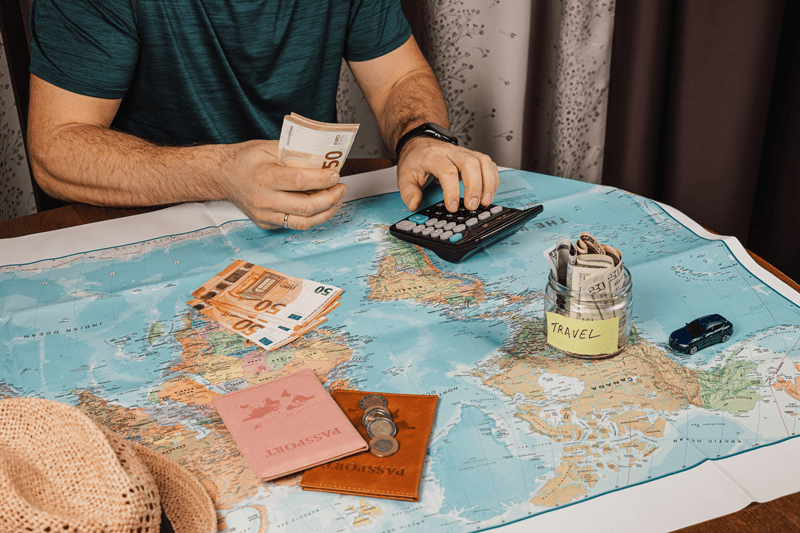
Most people do not like talking about money when they talk about travel. They talk about sunsets, airports, and funny stories from hostels, then quietly skip over the part where their card bill made them wince. Yet for many travelers, the difference between going once a year and going more often is simple: they know a few smart budget travel hacks and actually use them.
Money touches every part of a trip. It decides whether someone stays for three days or ten, whether they pick a private room or a dorm, and whether they can afford that last minute detour to a nearby city. Getting serious about saving does not have to mean acting stingy. It just means being a bit more intentional and picking cheap travel ideas that still feel exciting, not sad.
When it is finally time to book, small choices stack up. Picking flights with flexible dates can reveal options that are hundreds of dollars cheaper just one or two days apart. Flying midweek instead of Friday night or Sunday afternoon often saves serious cash. It is not glamorous, but it works.
Where someone stays matters just as much. Instead of only checking hotels, they can look at hostels with private rooms, guesthouses, or simple apartments. A place with a small kitchen can slash food costs because cooking breakfast and a few dinners at “home” leaves more money for a standout restaurant later. These early decisions are often the most powerful money-saving travel tips, even if they do not feel dramatic at first glance.
Before anyone opens a booking app, it helps to zoom out. Where are flight prices generally lower from their home airport? Which countries offer strong value for their currency right now? A traveler who looks at these questions first will usually build more affordable trips without trying very hard.
Choosing shoulder season instead of peak school holidays can cut costs on flights and stays in one move. Signing up for airline newsletters and tracking prices for a few weeks gives a sense of what is actually a deal and what is just a loud banner. Some travelers even keep a short list of destinations they are happy to visit, then jump on whichever one dips first. That simple list becomes one of their quiet budget travel hacks that keeps them in the air more often than friends who pick randomly.
Once on the ground, the little habits kick in. Walking instead of grabbing a cab for every short distance not only saves money but also shows corners of the city people would otherwise miss. Learning how to use local buses or metro lines on the first day turns confusing maps into tools for more cheap travel ideas, like visiting markets or neighborhoods away from the main tourist strip.
Food is another big one. Travelers can mix up street stalls, local cafes and the occasional sit down dinner. Many find their most memorable meals not in the fanciest spots, but at places where office workers queue during lunch. This pattern naturally leads to more affordable trips because they are paying local prices, not tourist premiums. Refill bottles at water stations, pick up snacks from supermarkets, and suddenly wallet stress drops.
For anyone flying across borders, costs can creep in where they least expect it. That is where the best money-saving tips for international travel come in. One of the simplest tricks is to use ATMs in the country instead of exchanging large sums at the airport, which usually has weaker rates and extra fees. Another is to check with their bank about cards that waive foreign transaction fees before they leave.
Roaming charges can quietly wreck a budget. Travelers can look for local SIM cards or regional eSIM plans so navigation and messaging stay affordable. Booking big train rides, regional flights or long distance buses a bit earlier also helps, especially in popular regions where last minute seats cost a lot more. These small steps are not exciting to brag about, but they stretch the travel fund further than almost anything else.

Adding children to the mix changes everything, including how money moves. Parents need budget-friendly travel tips for families that do not feel like punishment for the kids. One effective option is to choose slower travel. Staying in one city for longer instead of hopping around means fewer transport tickets, less packing stress, and more chances to find free parks, libraries and kid-friendly events.
Apartments or family rooms with basic cooking space are often cheaper than booking two hotel rooms. Families can make simple breakfasts and a few dinners, then pick one special meal out each day. Looking for free walking tours, public playgrounds and community events keeps everyone busy without endless ticket fees, and helps families design genuinely affordable trips that still feel rich in memories.
There has never been a better time to lean on technology for savings. Price comparison tools, map apps and deal alerts can flag cheaper routes and hidden discounts. But one of the best money-saving tips for international travel still comes from people, not phones. Chatting with hostel staff, drivers, or shop owners about where they would eat on a tight budget often uncovers spots that never show up on big websites.
Offline map downloads avoid surprise data costs, while basic translation tools help travelers read menus and understand signs, reducing silly mistakes like ordering something huge when they just wanted a snack. These tools do not replace curiosity, they just support it. Combined with local advice, they make it easier to explore further without burning through cash.
It is easy to slip into a mindset where saving money turns every decision into a stress test. That is not the goal. Smart travelers work with a simple rule: decide what matters most for this trip, then cut back on the rest. Maybe they really care about one iconic experience like a hot air balloon, a cooking class, or a boat tour. They can protect that one splurge and trim down on souvenirs, taxis or fancy hotel upgrades instead.
For families, that same mindset feeds into budget-friendly travel tips for families that feel kinder. One big “wow” moment for the kids plus plenty of simple fun like beaches, city parks and street food tastings can be more satisfying than a packed schedule of pricey attractions. In the end, what most people remember is who they were with, what they ate, and how a place made them feel, not how much they spent per night.
In general, booking flights a few weeks to a few months in advance works well for most routes. Popular holiday periods may need even more time. For stays, watching prices and pouncing when they dip often beats waiting for a last minute miracle that might never appear.
Yes. A tight budget just means making clearer choices. Focusing on simple stays, local food, public transport and free or low cost activities can turn a short break into a surprisingly rich adventure. Many people find they feel more connected to a place when they live like this instead of rushing between expensive attractions.
One strong habit is tracking daily spending, even roughly. Writing down transport, food, tickets and little extras once a day gives travelers a quick reality check. If costs start to drift higher than planned, they can adjust the next day instead of facing a shock at the end of the trip.
This content was created by AI