

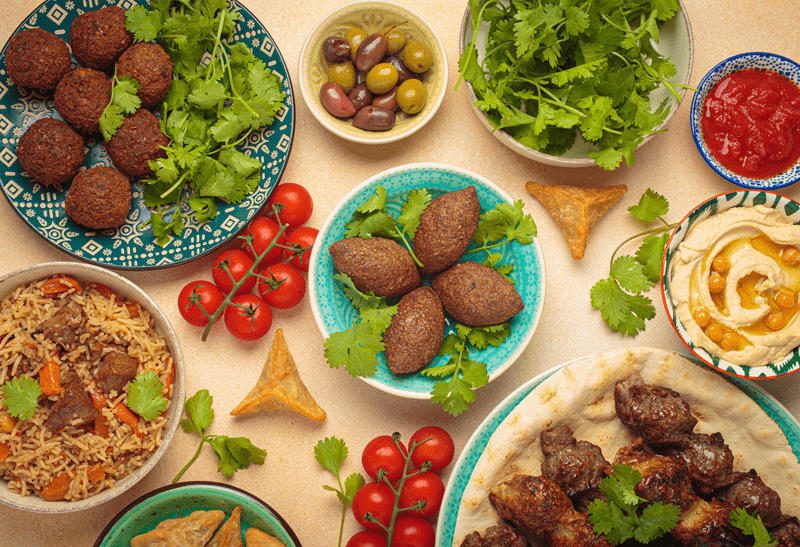
One of the outstanding characteristics of Middle Eastern food is its diverse combination of flavors. The region's cuisine, which is strongly influenced by history, geography, and traditions, is a real delight for travelers and food-loving people.
This guide to Middle Eastern flavors for travelers is about the dishes that are the most delicious, the essential flavors, and the food culture, which is unique to the region.
Now, let’s explore the Middle Eastern Cuisine guide. It includes not only the slow-cooked meats but also the fresh salads and fragrant rice dishes.
One of the most well-known Arabic foods is undoubtedly falafel and hummus, which are the two things that everyone all over the world is fond of. Falafel is a breaded, deep-fried ball of chickpeas or fava beans, which are combined with herbs and spices. The falafel sandwich is the most popular way to eat it, or it can be served with tahini sauce.
Hummus is the most loved food of all. This velvety, rich dip consists of chickpeas, tahini, garlic, and lemon. It is a very light, tasty dish and an excellent accompaniment to warm bread or fresh veggies. Those two foods are among the best Middle Eastern dishes to try for anyone starting their food journey in the region.
The shawarma is a recognized street food that is visually apparent in both the metropolis and the country. Extremely thin portions of marinated meat are piled on a vertical spit, roasted slowly, and shaved into wraps. Garlic sauce, pickles, and fries together make the thing excellent. Its smoke flavor is an example of how Middle Eastern cuisine uses slow cooking to get a tastier result.
Kebabs are another selection from which the food lovers can choose the legendary Middle Eastern dish to their taste. The lamb, chicken, or beef, respectively, can be used for the making of kebabs, which are then garnished with spices and barbecued over the flame. The smell of grilled meat is their perfume, especially in the markets and coming from food stalls.
Most traditional Middle Eastern meals are quite often rice dishes and thus require the preparation of families for special occasions. Mansaf, the national dish of Jordan, is a dish prepared using lamb, which is stewed in jameed and then served over rice and bread. The meal is symbolic of the traits of help and oneness.
Maqloba, meaning "upside down," is a rice meal consisting of vegetable, meat, and spice layers. The pot is turned over after cooking to display a colorful and aromatic tower. If you are a fan of both presentation and flavor, this is one of the best Middle Eastern dishes to go for.
The platter mezze is a selection of small plates from which many tastes can be experienced simultaneously. Most of the time, the offering would be hummus, baba ghanoush, tabbouleh, olives, falafel, and yogurt-based dips. Food served in this way is closely associated with the culture of Middle Eastern food, as it facilitates sharing and trusting each other with long talks during a meal.
Travelers are often fond of mezze as it serves as a quick guide to Middle Eastern flavors for travelers, which they can use to safely try various dishes without having to order a full meal.

Rice remains a daily staple in the diet of the vast majority of countries across the region. In some places, biryani might be the name and the recipe; however, kabsa and pilaf are the main dishes that are prepared by using spices, nuts, and raisins. These meals depict the influence of the trade routes that connected the Middle East with Asia and Europe.
Nevertheless, bread is the hero of a great number of Arabic dishes. No matter whether it is bread that is stuffed, baked, or just a little bit toasted, bread is the most important thing when it comes to dipping, dressing, or simply eating it as a side. One cannot, in any way, overestimate its value in the traditional Middle Eastern meals.
Besides savory dishes, Middle Eastern food also comes with a delectable dessert lineup. Baklava, which is layered with nuts and soaked in sweet syrup, is the number one choice in most countries. Kunafa, a cheese-filled pastry that is topped with crunchy noodles and syrup, is mostly eaten during festivities.
When talking about drinks, mint tea and Arabic coffee are the best options. What Arabic coffee and mint tea mean to people is far beyond being just a drink; it is a sign of community and friendship. Welcoming coffee to guests is not only a tradition amongst cultures; it is an act that is performed to demonstrate one's love and respect towards the visiting ones.
One of the most important things that sets Middle Eastern cuisine apart from others worldwide is the fact that it uses distinctive and unique spice blends. Za'tar is a combination of herbs and sesame seeds; it might be eaten on top of the bread or used directly as a seasoning.
Sumac is known for its sourness, which makes salads and grilled meats even tastier. Baharat is a mixture of spices that are typically used to warm and slow down the cooking process of a meal. By using those spices, the travelers not only quickly recognize the flavors but also can grasp the fact that the dishes coming from this part of the world taste so different for a reason.
Eating from street stands is one of the key factors that make up Middle Eastern food culture. To have a bite of the best street food, excluding shawarma and falafel, the travelers should not overlook:
These things would let a person get a fast regional food taste, and also, they are the best choice for anyone who is in a hurry but still wants to have a quick, delicious snack.
The Middle Eastern culinary tradition is very rich; it is a comfort to people, and it is also filled with stories. Each meal is a mirror image of the history, family ways, and cultural interactions that have been going on for hundreds of years.
The food is there not only to unite people and showcase the brilliance of tradition, but also consists of simple street snacks and nutritious meals that are served at family gatherings, where you can meet, mingle, and feast. For any person willing to go further, this place offers them hospitality that is warm, meals that are unforgettable, and a love for the flavors that stays forever.
It is its use of warm spices, fresh herbs, slow-cooking techniques for meats, and meals that are served for sharing, which makes it rich, complex, and memorable.
One should start with hummus, falafel, shawarma, kebabs, and manakish for a simple and easy introduction to the common flavors.
For the most part, the dishes are made with aromatic spices and not chili heat. The tastes are warm, balanced, and can be liked by all.
Definitely, most of them contain different sorts of vegetables, olive oil, grilled meats, whole grains, and fresh herbs, which makes them nutritious and well-balanced.
This content was created by AI